

Medjool Date Grading Machine
Medjool dates naturally vary in size after harvesting. When dates of different sizes are mixed together, manual grading makes it difficult to guarantee consistent product specifications.
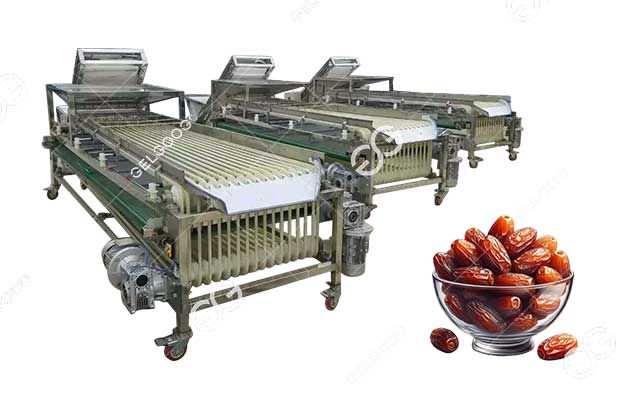
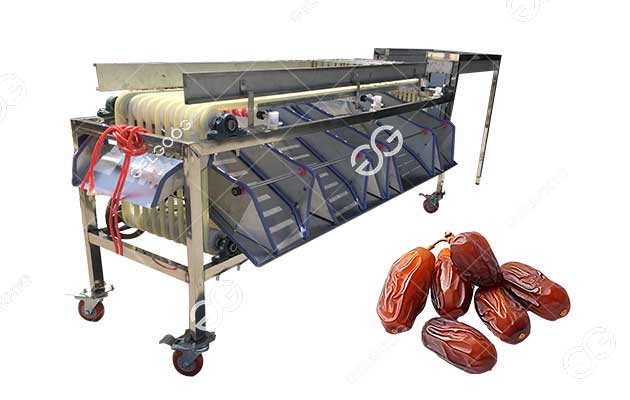
Gelgoog Medjool date grading machine is an industrial mechanical grading system that grades dates based on their diameter. Dates of different sizes fall from different outlets. This produces a variety of dates of uniform size. These dates can be used for subsequent packaging, wholesale distribution, export, or further processing.
How Does a Medjool Date Grading Machine Work?
Medjool date size grading process can be summarized as:
Feeding → Even Distribution → Mechanical Size Grading → Multi-Grade Separation → Separate Discharge
- Even Feeding: Medjool dates enter the machine through the feeding section and are distributed into the grading area. Uniform feeding helps prevent excessive accumulation of dates and allows the grading structure to work continuously.
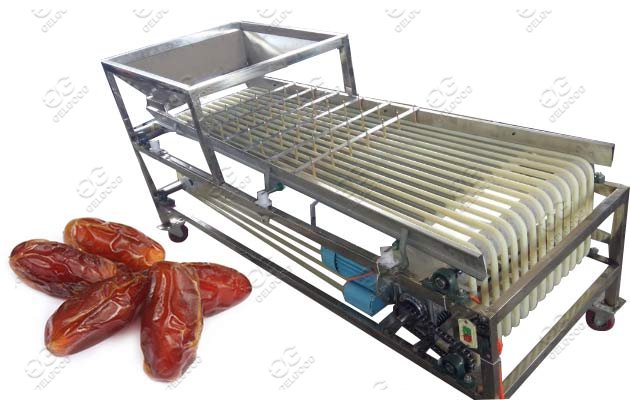
- Grading Section: The dates move forward through a series of grading tracks or rollers. The spacing between the grading tracks is progressively increased along the conveying direction. This creates different size-grading zones.
- Small Medjool Dates Are Separated First: When a smaller Medjool date reaches a gap that is larger than its diameter, it passes through the grading section and falls into the corresponding collection channel. Larger dates remain on the grading tracks and continue moving forward. This allows different sizes to be separated continuously without manually measuring each date.
- Larger Dates Enter Subsequent Grades: As the grading gaps gradually increase, larger Medjool dates are separated into the next size categories. The largest dates that do not pass through the previous gaps continue toward the final grading outlet.
- Output: The result is a multi-grade output such as: Small → Medium → Large → Extra Large. The exact grade definitions can be customized according to the customer's product specifications and target market.
Advantages of Medjool Date Size Grading
- Consistent Product Specifications: Dates of the same grade are more uniform in size. This facilitates packaging and sales, enabling standardized product sales.
- Reduced Labor: The Medjool date size sorter replaces reliance on manual measurement. Lowers labor costs for businesses.
- High Efficiency: The Medjool date-size grading machine can process 1-10 tons of dates per hour. It can achieve 24/7 continuous production.
- Customization: Gelgoog can configure the grading spacing according to the diameter range of dates and the required number of grades. Gelgoog's existing date grading machines can be configured with approximately 4-7 or more grades.
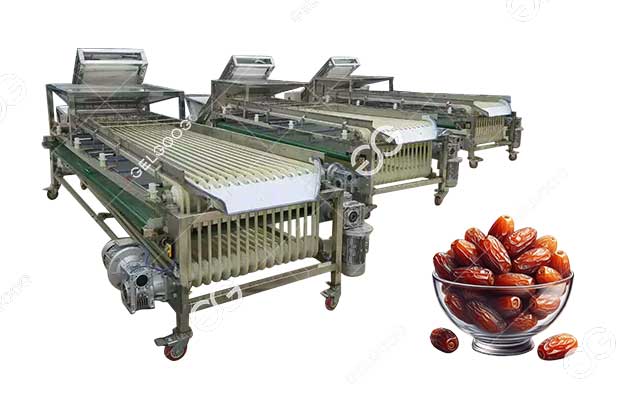
- Modular Design: The Medjool date sorting machine can be used independently or integrated into a production line. For example, in a Dates Fruit Washing Drying Sorting Machine Line.
- Versatile Use: Medjool size grading equipment is also suitable for date, Safawi, Mabroom, Deglet Noor, Ajwa, and more.
Medjool Date Size Grading Machine Applications
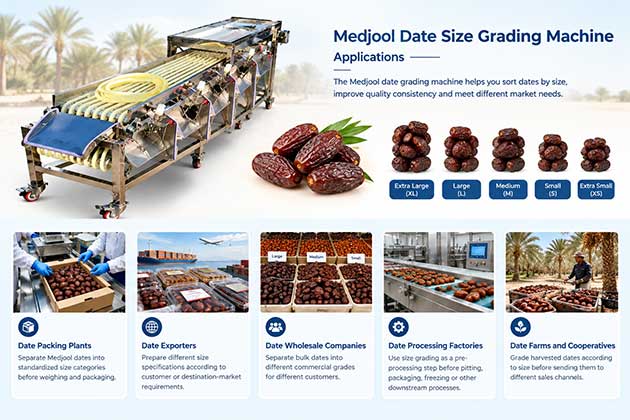
- Date Packing Plants: Separate Medjool dates into standardized size categories before weighing and packaging.
- Date Exporters: Prepare different size specifications according to customer or destination-market requirements.
- Date Wholesale Companies: Separate bulk dates into different commercial grades for different customers.
- Date Processing Factories: Use size grading as a pre-processing step before pitting, packaging, freezing, or other downstream processes.
- Date Farms and Cooperatives: Grade harvested dates according to size before sending them to different sales channels.
Technical Data
| Model | Capacity | Grading Grades | Size Adjustment | Power | Voltage | Application |
| GG-MD1000 | Up to 1,000 kg/h | 4–7 | Customizable | 0.55–0.75 kW* | 220 V* | Medjool Date Packing |
| Customized Model | Customized | 4–7+ | Customizable | Customized | 220/380 V | Commercial Date Processing |
| Note: Reference values based on Gelgoog's existing date size grading equipment. Final specifications depend on the Medjool date variety, size distribution, required grades, and machine configuration. | ||||||